
 EN
EN
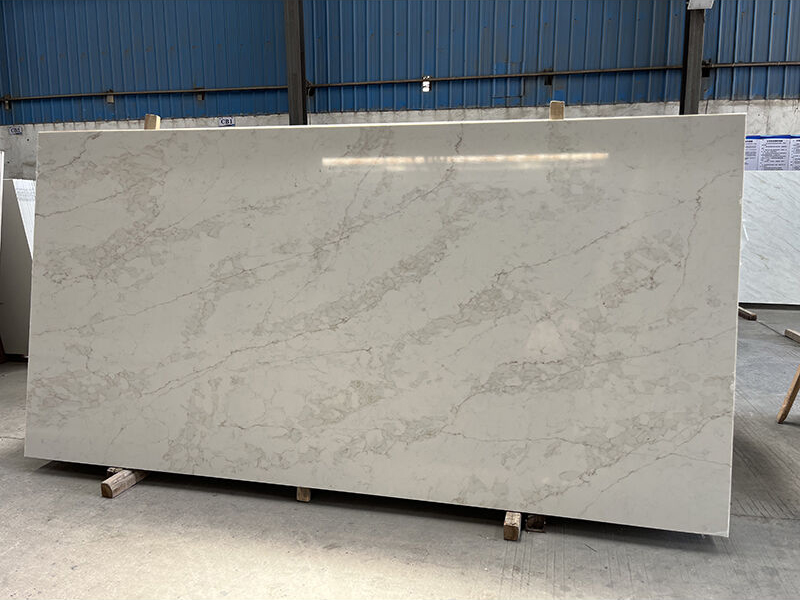
For business-to-business purchasers, builders and developers, cost effectiveness goes far beyond the per square meter cost per unit. The overall value of the surfacing materials depends on durability, maintenance requirements, speed of installation, and expected performance life. Quartz stone is known in its regard as a cost-effective surfacing material in residential, commercial and hotel environments. Let's examine the long term value proposition of quartz stone.
Lower Maintenance Costs Over Time
To maintain resistance to stains and the ingress of liquids, many natural stones, like granite and marble require to be sealed frequently. The ongoing process of sealing involves both material costs and labor. Natural stone may require sealing between every one to two years, depending on use. These costs will significantly add up when implemented on a large scale, for example in a commercial building's restaurant or hotel bathrooms.
Quartz is non-porous and never requires sealing. Oil, cleaning agents, and spilled liquids simply sit on the surface and can be quickly wiped clean with a cloth and a mild soap and water. Maintenance workers can easily clean quartz surfaces, keeping them looking like new. With use over 5 or 10 years, these labor costs, material costs and operational down-time costs make quartz far more affordable compared to its natural counterparts. Facility managers, controlling multiple properties can easily see the benefit multiplied per property, hence a good return on investment in specifying quartz stone.
Reduced Replacement and Repair Frequency
Heavy traffic commercial areas like airport counters, restaurant tables, and hotel lobbies can lead to frequent scratching and impacts causing the surfaces to crack or stain. These cracks or chips will inevitably lead to replacement costs or costly repairs of entire stone slabs. In comparison to natural stone, Quartz stone is constructed from quarried natural quartz granules that are mixed with binding agents, hence the material is much more resistant to impact and scratching.
Unlike other materials, Quartz does not chip or crack easily; therefore repair incidents and frequent replacement of the stone slab are drastically reduced. Property owners and developers benefit from lower lifecycle costs associated with Quartz material and avoid costs for early refurbishment or replacement of the stonework. In residential or commercial properties that face high foot-fall where tenants are changing on a regular basis, Quartz is an ideal choice that requires little refurbishment for each new tenant.
Efficient Fabrication and Less Waste
In producing natural stone, it is first quarried and then transported to be sawn into slabs. The variable thicknesses, potential internal cracks, and inherent flaws in natural stone contribute to greater wastage. Conversely, Quartz stone is produced to specific, accurate, consistent dimensions, there are no invisible fissures or weak spots. Therefore, fabricators may confidently and accurately cut, edge and polish each quartz slab with significantly less wastage compared to its natural stone alternative.
The equal densities of quartz allow it to be fabricated to thinner specifications without compromising strength thus also reducing the quantity of material required to complete a job. More efficient processing and less waste translates to less expenditure on labor and the efficient use of resources. Fabricators and importers also benefit from higher profit margins due to reduced waste, thus offering end users better value for money. In developments of a certain scale requiring the utilization of many thousands of slabs, waste reduction can represent thousands of dollars of savings.
Predictable Pricing and Stable Supply Chains
Price fluctuations in the natural stone market are common and are affected by varying availability, quarrying capacity, shipping expenses and international duties. In contrast to natural stone, Quartz stone provides fixed and stable prices to business customers. This can be attributed to the fact that quartz is manufactured in a climate-controlled environment all year around.
The stable price structure offered by quartz is beneficial for business-to-business purchasers undertaking substantial projects, because budget forecasts will not be altered by unpredicted increases in market prices. Also, due to locally manufactured availability in many regions, delivery lead times for quartz can be much shorter than natural stone imports. Shorter supply chains reduce freight costs, and minimize shipping delays. During times of supply chain instability, Quartz producers have more production capacity, enabling easier replacement when shipments are impacted by external factors.
Summary
Quartz stone represents a cost-effective surfacing material because it reduces overall maintenance, replacement and repair costs. Furthermore, the cost of the material itself is very competitive, with less waste incurred during fabrication, and its predictable prices and stable supply chain offers stability for large scale projects. In large developments, hotels, offices and commercial spaces, quartz stone is a surfacing material that offers excellent value compared to natural stone. We at Xiamen Nishi Group Co., Ltd. have advanced production facilities and stringent quality control to offer high-quality Quartz stone, alongside marble, granite, artificial marble, luxury stone, stone monuments, carvings, crafts, nano stone and basalt. Contact us for any project inquiry or sample request.